
Wind Ventilators Waterproofing for Leaking Turbine Vents
Wind ventilators waterproofing is needed wherever turbine vents have been fitted to a metal roof. Each ventilator sits over a hole cut in the roof sheet. The base plate has to follow the corrugations of the sheet, and the joint is usually closed with sealant and screws. Constant spinning, vibration and heat loosen that joint until rain runs in around the base.
Leak Lock Insulation Contracting seals the bases, flashings and fixings of wind-driven turbine ventilators so they keep extracting hot air without letting water in. Warehouse operators, factory managers and workshop owners call us when drips appear in a neat pattern beneath each ventilator.
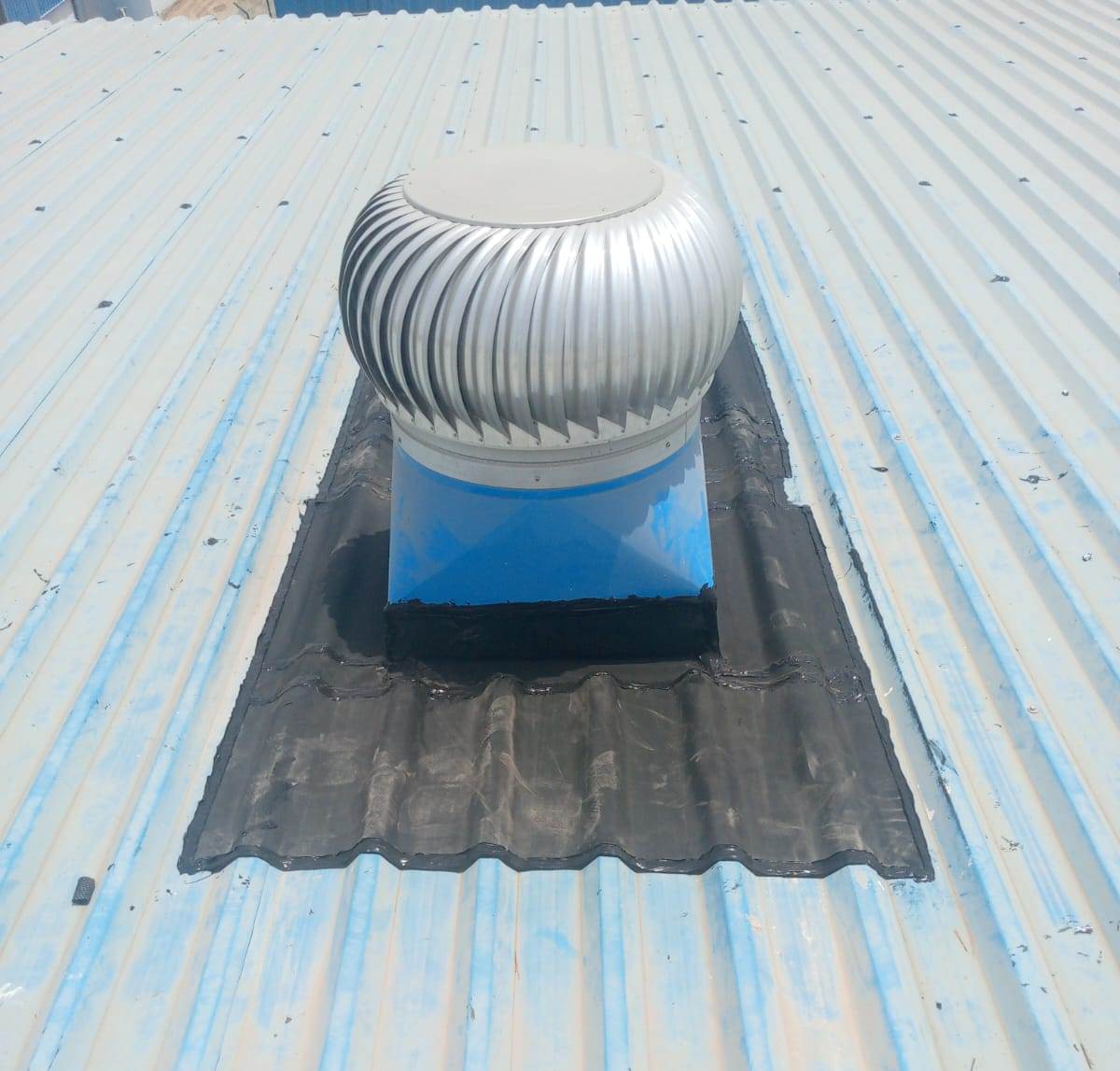
Signs Your Roof Ventilators Are Leaking
For example, clients contact us for one or more of the following reasons.
- Drips beneath each vent: wet spots on the floor in line with the turbines.
- Cracked sealant at the base: the original mastic has dried and split.
- Loose base plates: fixings have worked free through vibration.
- Rust around the opening: corrosion where water has been sitting.
- Gaps at the corrugations: the base no longer follows the sheet profile.
- Noisy or seized turbines: A sign the unit and its base need attention.
Our Ventilator Waterproofing Services
Base Flashing Sealing
EPDM membrane wrapped around the ventilator base and bonded to the sheets.
Fixing Renewal
In addition, loose or rusted base fixings replaced and sealed.
Profile Closure
Gaps between the base plate and sheet corrugations closed.
Throat & Neck Sealing
Similarly, the joint between base and ventilator neck made watertight.
Surrounding Lap Sealing
Nearby sheet laps and screws sealed at the same time.
Redundant Vent Closure
Also, unused ventilator openings closed and sealed over.
Our Wind Ventilator Waterproofing Process
Because every site is different, we adapt these steps to your wind ventilator waterproofing project.
- InspectionBefore anything else, each ventilator base is checked for gaps, rust and loose fixings.
- CleaningThen, we remove old sealant, dust and rust around the base.
- Fixing & ClosureAfter that, we secure the base and fill the profile gaps.
- Membrane SealingAs soon as that is done, we bond EPDM membrane around the full perimeter of the base.
- Water TestFinally, the sealed base is water tested where possible.
Materials & Methods
Ventilator bases are sealed with EPDM membrane and bonding adhesive. The membrane is cut and shaped to follow the corrugations and lapped so that water runs over each joint, never into it. Where the base plate is distorted or rusted we repair it first.
In short, the work includes the following.
- EPDM membrane shaped around the ventilator base
- Bonding adhesive for metal roofs
- Replacement fixings with sealing washers
- Rust treatment at the roof opening
Why Choose Leak Lock for Wind Ventilator Waterproofing
Above all, clients choose us for these reasons.
- Every base treated: we seal the full perimeter, not only the visible gap.
- Ventilation kept working: sealing is done without obstructing the turbine.
- Safe roof access: in addition, our team uses harnesses, lifelines and planned access for all ventilator waterproofing work.
- Written quotation and warranty terms: as a result, you see the scope, price and warranty for your ventilator waterproofing before work starts.
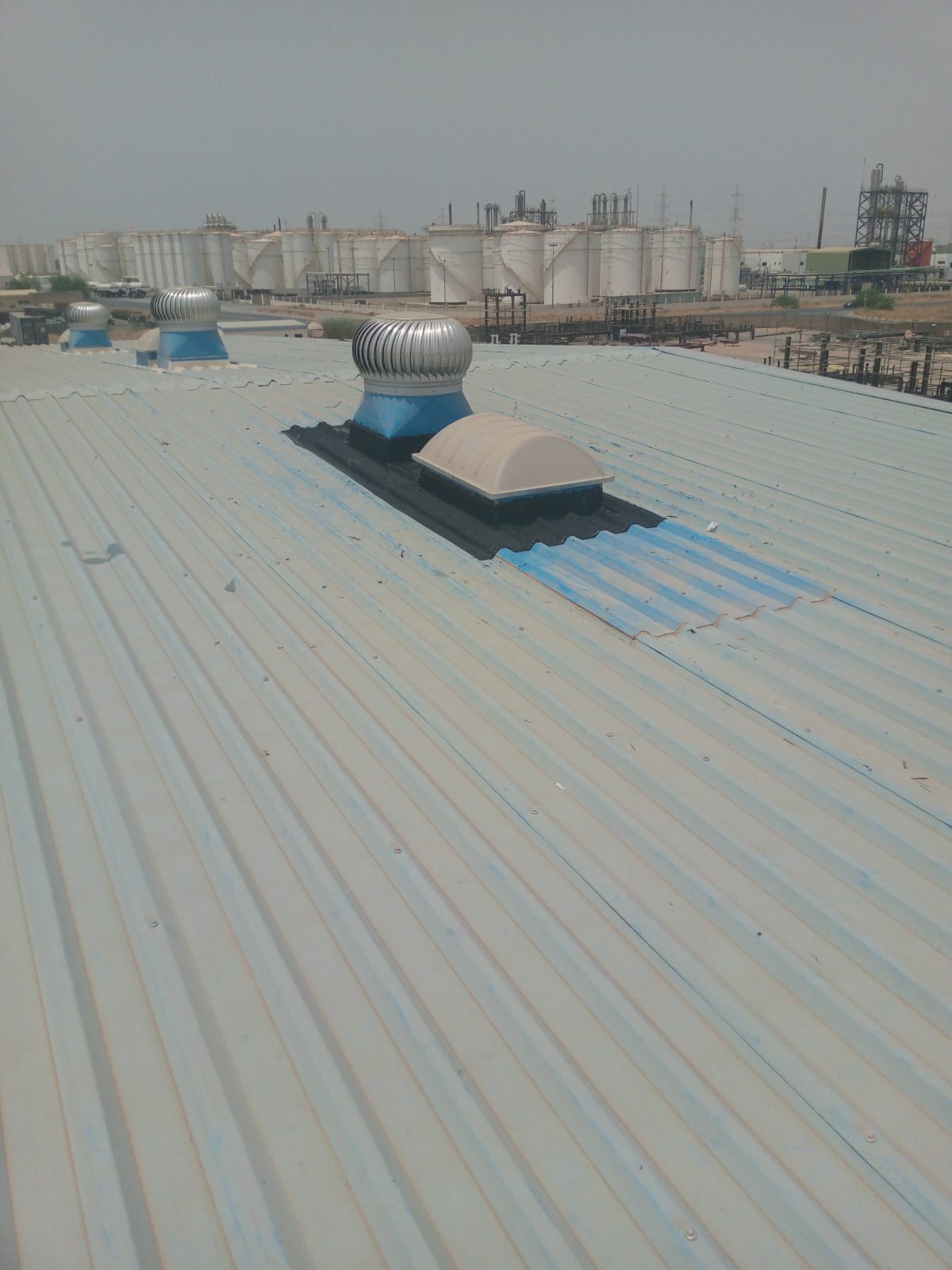
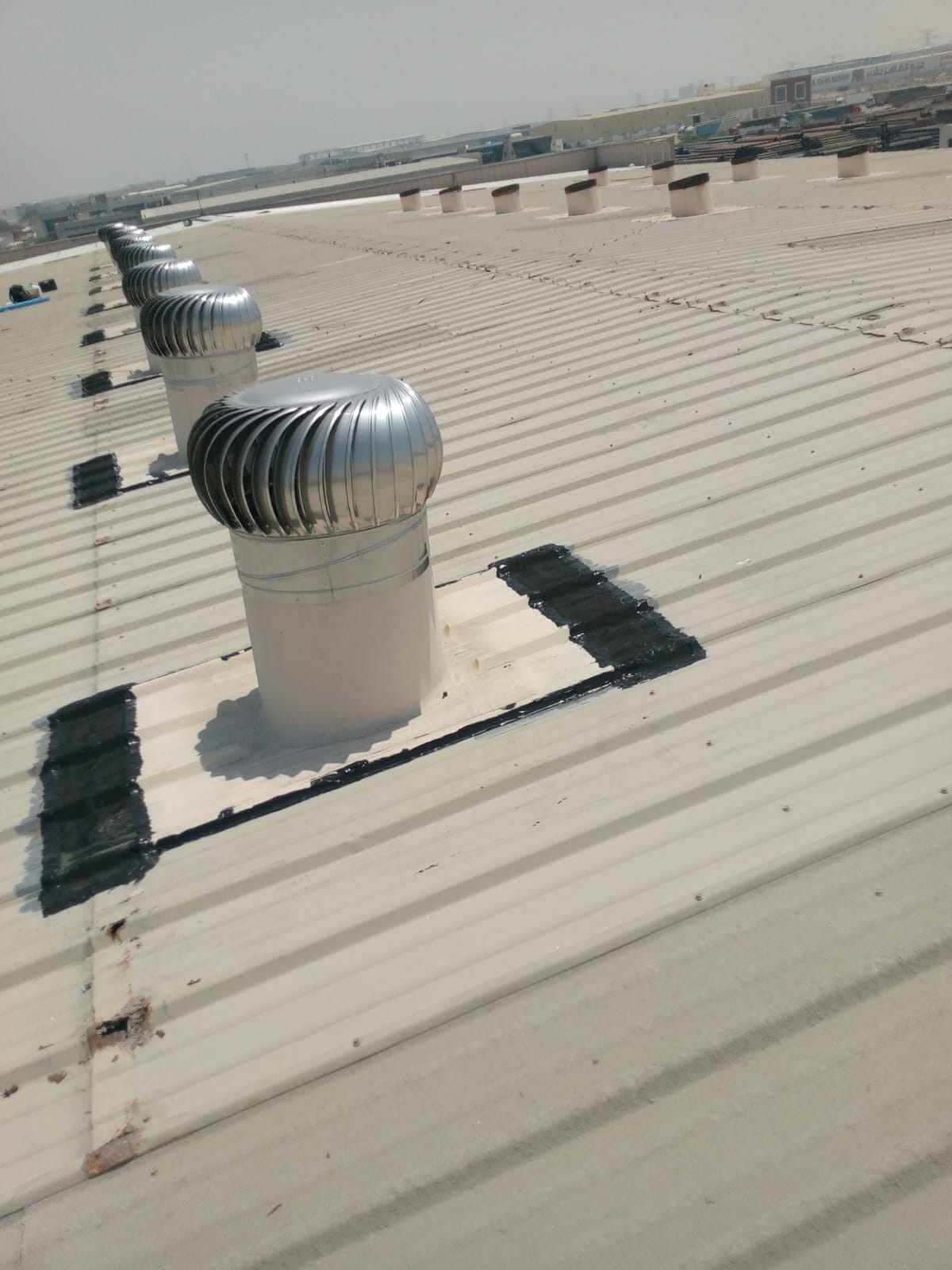
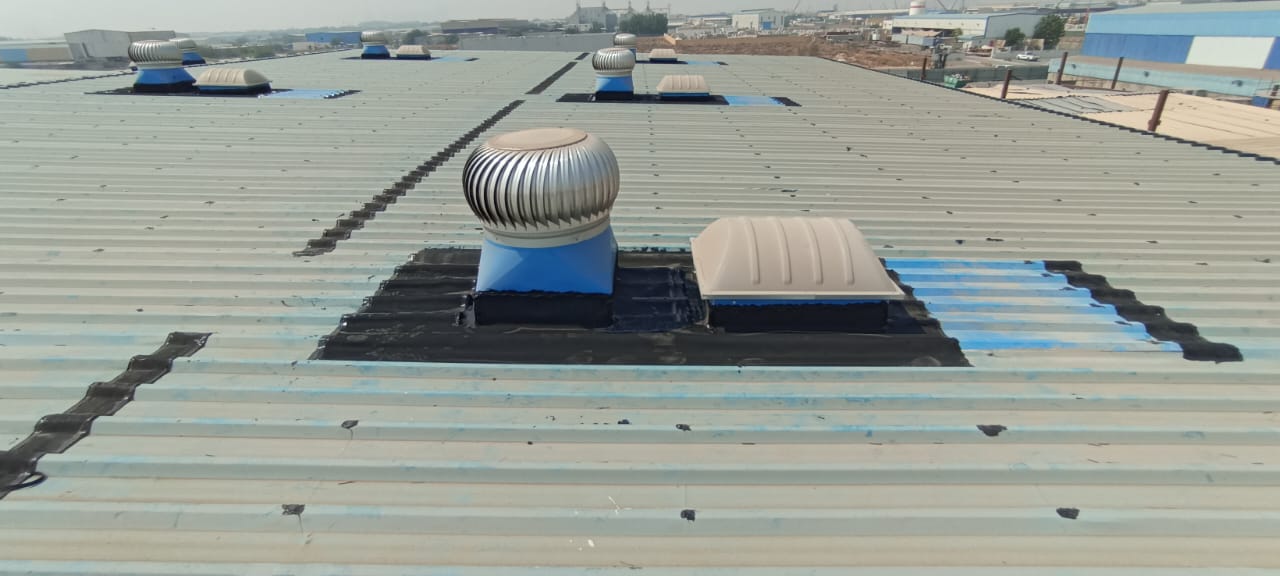
Wind Ventilator Waterproofing Project Photos
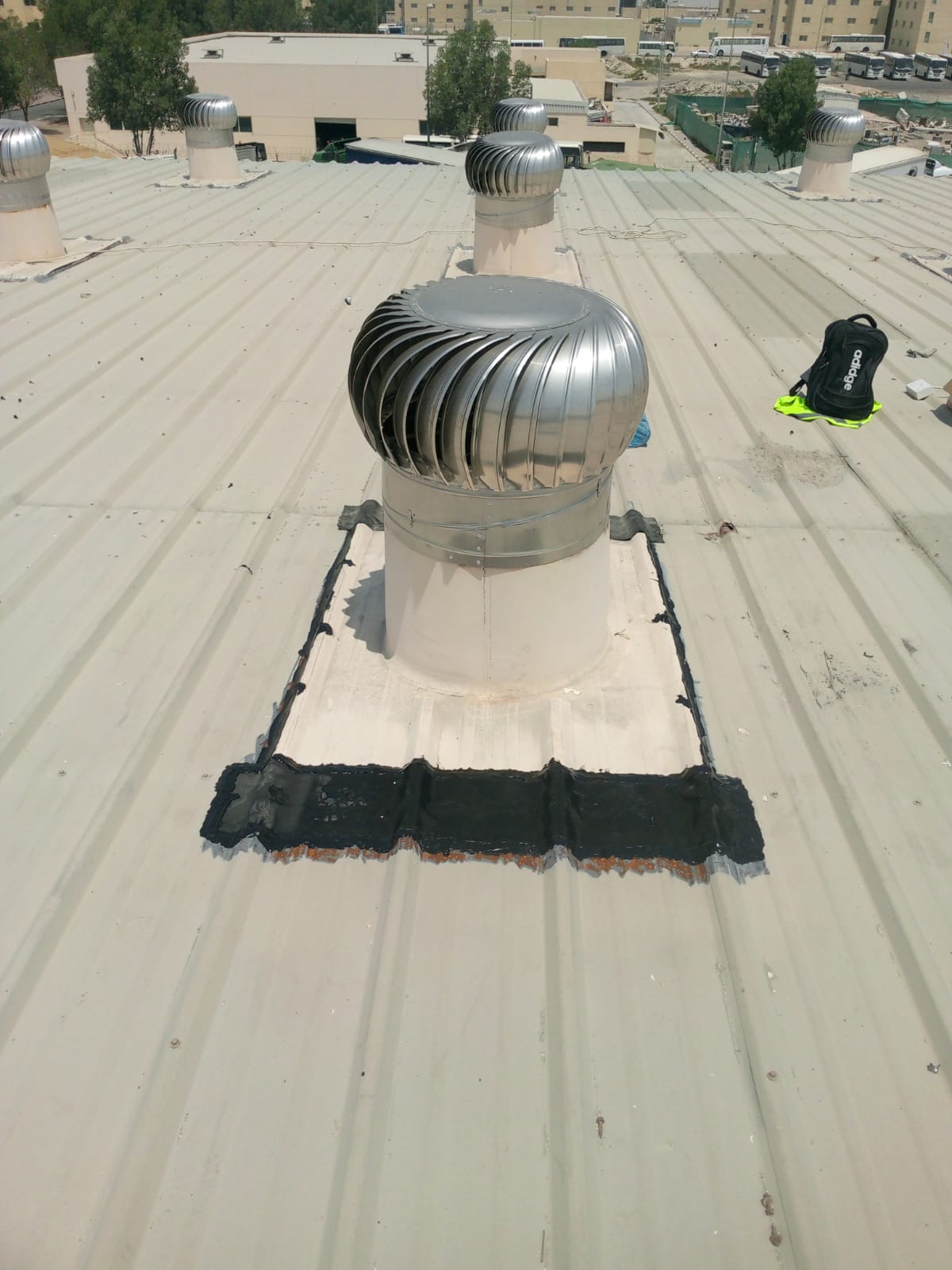
For example, these photos show our wind ventilator waterproofing work on site.
Areas We Serve
We seal roof ventilators on warehouses and factories in Dubai, Abu Dhabi, Sharjah, Ajman, Umm Al Quwain, Ras Al Khaimah and Fujairah. As a result, one team can handle wind ventilator waterproofing at all of your sites.
Dubai Abu Dhabi Sharjah Ajman Umm Al Quwain Ras Al Khaimah Fujairah
Wind Ventilator Waterproofing FAQs
Questions about leaking turbine ventilators. Also, you can call us with any other question.
A turbine ventilator in good condition sheds rain. Most leaks come from the base, where the unit is fixed to the roof sheet, and not from the turbine head.
Yes. The base is sealed in place. Removal is only needed if the unit or its base plate is damaged.
If several are leaking, the others are usually the same age and condition, so treating them together is more economical than repeated visits.
No. The membrane is applied to the base and flashing only, so the turbine continues to spin freely.
Yes. Redundant openings can be closed with matching sheet and sealed.
Related Services
Ventilators & EPDM Waterproofing
EPDM membrane sealing around roof ventilators and their bases.
Read MoreSmoke Vents Waterproofing
Watertight sealing of smoke vent frames and kerbs.
Read MoreMetal Roof Waterproofing
Sealing of laps, screws and ridges on metal sheet and sandwich panel roofs.
Read More
In addition, you can see all of our waterproofing and fabrication services. Otherwise, contact our team to discuss your project.
Seal Your Roof Ventilators
Let us know how many ventilators are on the roof. We will inspect the bases and quote for sealing them. After that, we will arrange a suitable time to visit.